Contents:
- A 2,000-Year History of Violet Symbolism
- Violets Symbolism by Color: What Each Shade Means
- Purple and Blue-Violet
- White Violets
- Yellow Violets
- Pink and Red Violets
- Violets in Literature and Modern Culture
- Practical Tips for Using Violets Symbolically in Your Garden
- FAQ: Violets Symbolism
- What do violets symbolize in love?
- What is the spiritual meaning of violets?
- What do violets symbolize at funerals?
- Do different colored violets mean different things?
- Are African violets the same symbolically as wild violets?
Have you ever wondered why a tiny purple flower has moved poets, emperors, and lovers to obsession for over 2,000 years? Violets symbolism runs surprisingly deep — far beyond the simple “modesty” label most sources slap on them and call it a day. These small, ground-hugging blooms carry layered meanings tied to love, death, loyalty, and spiritual transformation. Once you understand what violets actually represent, you’ll never look at a patch of Viola odorata the same way again.
Violets primarily symbolize modesty, faithfulness, and everlasting love. Purple violets represent spiritual wisdom and devotion; white violets mean purity and innocence; yellow violets signal cheerfulness and platonic affection. In Victorian floriography, giving someone violets was a quiet but powerful declaration: “I’ll always be true.”
A 2,000-Year History of Violet Symbolism
The ancient Greeks were the first to codify violet meaning in writing. Athens used the violet as its city emblem — Pindar called it the city “crowned with violets” around 500 BCE. Greeks associated the flower with Io, a mortal woman Zeus transformed into a heifer; he supposedly created violets as her only worthy food. That mythological link cemented violets as symbols of divine favor and tender love from the very start.
Romans leaned into the violet’s connection with death and remembrance. They planted violets on graves and wore violet crowns at funerals, believing the flower eased grief and honored the dead. This funerary tradition explains why violets still appear in sympathy arrangements today, even if most buyers don’t consciously know why.
By the medieval period, Christian iconography had absorbed the violet entirely. The flower’s habit of growing low to the ground became a metaphor for humility and the Virgin Mary. You’ll find violets painted into the borders of illuminated manuscripts from the 13th and 14th centuries — a visual shorthand for holy modesty. St. Bernard of Clairvaux called Mary “the violet of humility” in the 12th century, a phrase that shaped Western floral symbolism for centuries.
Violets Symbolism by Color: What Each Shade Means
Color shifts meaning dramatically with violets. Most people default to purple, but the Viola genus produces flowers in at least six distinct color groups, each carrying its own symbolic weight.
Purple and Blue-Violet
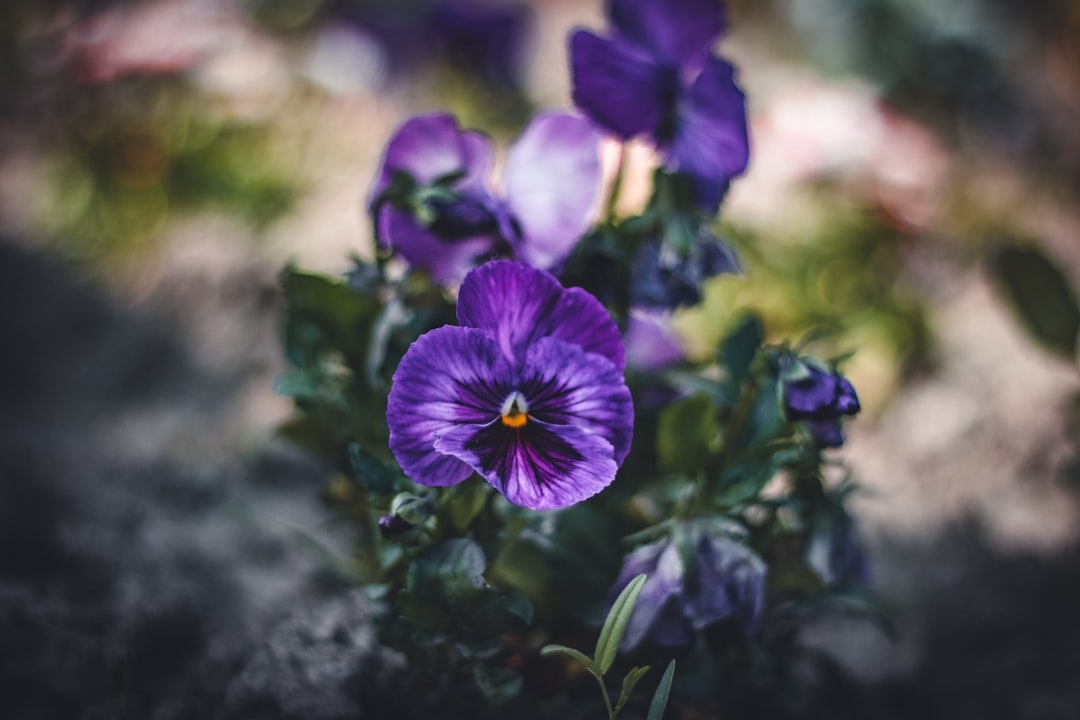
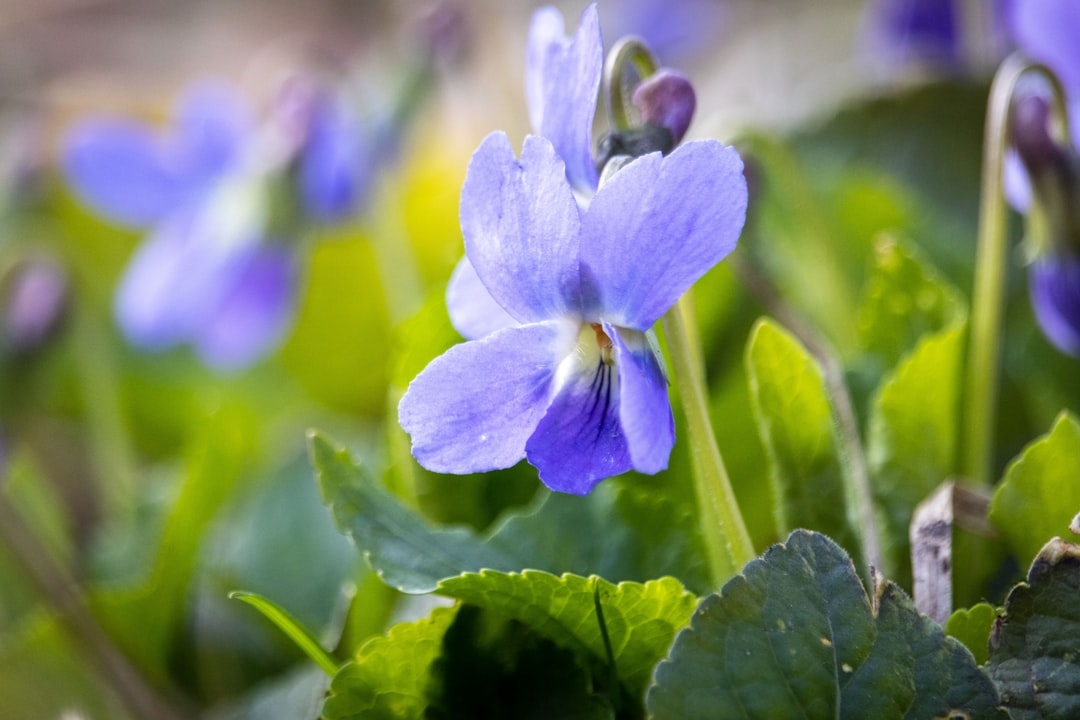
The classic purple violet is the heavyweight of the group. It represents spiritual wisdom, dignity, and unwavering devotion. In chakra traditions, purple connects to the crown chakra — the seat of higher consciousness. Giving purple violets says, essentially, “I respect and adore you at the deepest level.” Napoleon Bonaparte was famously obsessed with purple violets; he wore a locket containing violets picked from Joséphine’s grave until his death in 1821.
White Violets
White violets (Viola odorata ‘Alba’) symbolize purity, innocence, and new beginnings. They’re the go-to choice for christening gifts and first-communion arrangements in Catholic traditions. In the language of flowers popularized by the 1819 book Le Language des Fleurs by Charlotte de Latour, white violets specifically meant “let’s take a chance on innocence together.”
Yellow Violets
Yellow violets — especially Viola pubescens, native to eastern North America — carry meanings of cheerfulness, rural happiness, and platonic warmth. They’re the friendliest flower in the violet family. A bouquet of yellow violets sent to a colleague or neighbor reads as genuine goodwill without romantic overtones.
Pink and Red Violets
Pink violets blend the spiritual depth of purple with the warmth of red, landing on romantic affection and youthful love. They’re popular in wedding arrangements in the South and Mid-Atlantic US, particularly in May and June when demand peaks for seasonal bridal work.
Professional florists in the US typically charge $4–$8 per stem for fresh-cut sweet violets (Viola odorata) when they’re even available — most commercial growers don’t cultivate them at scale because they wilt within 24 hours of cutting. If you want violet symbolism in a bouquet that lasts, savvy florists substitute African violets (Saintpaulia) as potted gifts or use pressed violet petals in resin jewelry and stationery. Growing your own in USDA Zones 4–8 is by far the most reliable way to have fresh violets on hand from March through May.
Violets in Literature and Modern Culture
Shakespeare referenced violets in at least four plays. In Hamlet, Ophelia distributes violets before her tragic end, saying they “withered all when my father died” — a direct invocation of the flower’s grief symbolism. In A Midsummer Night’s Dream, Oberon describes a bank where violets grow as the most enchanted spot in the forest. These weren’t random plant choices; Shakespeare’s audiences recognized the symbolic vocabulary instantly.
In the 20th century, violet imagery became code in LGBTQ+ communities. Sappho’s poetry, which described giving violets to beloved women, was revived in the early 1900s. By the 1920s, giving a woman violets or wearing them was understood in certain circles as a signal of sapphic identity — a tradition some historians trace directly to the symbolism of loyal, devoted love embedded in the flower for millennia.
Today, violets appear in perfumery as one of the most commercially significant floral notes. Orris root — derived from Iris germanica but carrying a violet-like scent — anchors fragrances from Chanel No. 5 to Dior’s Fahrenheit. The violet note itself (ionone) is used in over 30% of modern feminine fragrances, according to fragrance industry data from Givaudan.
Practical Tips for Using Violets Symbolically in Your Garden
Understanding meaning is one thing. Applying it intentionally in your garden is what separates a hobby gardener from someone with a genuinely expressive outdoor space.
- Plant sweet violets near entryways to signal welcome and faithfulness to anyone who visits — a tradition recorded in English cottage gardens as far back as the 1600s.
- Use white violets in a memorial garden alongside forget-me-nots and rosemary to honor a loved one. The combination covers the symbolic triad of purity, remembrance, and loyalty.
- Pair purple violets with yellow daffodils for a March–April display that balances spiritual depth (violet) with renewal and optimism (daffodil). Both bloom simultaneously in Zones 5–7.
- Grow violets in containers for gifting. A 4-inch pot of blooming Viola odorata costs roughly $3–$5 to grow from a plug and makes a deeply meaningful, low-cost gift that carries more symbolic weight than a generic supermarket bouquet.
- Press violet blooms from your own garden in early spring and use them in handmade cards or journals. The act of preserving them connects directly to the Victorian tradition of pressed flower symbolism, where a violet tucked into a letter meant “I am thinking of you faithfully.”
FAQ: Violets Symbolism
What do violets symbolize in love?
Violets represent faithful, enduring love rather than passionate romance. Giving someone violets historically meant you were pledging constancy — “I will always be devoted to you.” Purple violets carry the deepest romantic meaning; pink violets suggest younger, more playful affection.
What is the spiritual meaning of violets?
Spiritually, violets symbolize humility, divine love, and higher consciousness. In Christian tradition, they represent the Virgin Mary’s modesty. In broader spiritual contexts, the purple color connects violets to the crown chakra and the pursuit of wisdom.
What do violets symbolize at funerals?
Violets have been used in funeral and mourning traditions since ancient Rome. They symbolize remembrance, eternal rest, and the continuation of love beyond death. They’re appropriate in sympathy arrangements and memorial gardens.
Do different colored violets mean different things?
Yes. Purple violets mean devotion and spiritual wisdom; white violets mean purity and innocence; yellow violets mean cheerfulness and platonic friendship; pink violets mean youthful romantic love. The color is as important as the flower itself when giving violets as a symbolic gift.
Are African violets the same symbolically as wild violets?
Not exactly. African violets (Saintpaulia ionantha) are a separate genus entirely, native to Tanzania. They’ve inherited some violet symbolism by association — particularly devotion and faithfulness — but they don’t carry the full historical and literary weight of true violets (Viola species). They’re popular as gifts because they’re long-blooming and easy to grow indoors in all US hardiness zones.
The next time you see violets pushing through leaf litter in late February or early March — often the first wildflowers of the year in Zones 5–7 — you’re watching one of the most symbolically loaded plants in human history do what it’s always done: arrive quietly, persist faithfully, and mean far more than its size suggests. Plant them with intention, give them with purpose, and let 2,000 years of meaning work in your favor.