Contents:
- The Historical Roots of Foxglove Symbolism
- Core Symbolic Meanings of Foxglove
- Healing and Medicine
- Insincerity and Deception
- Magic, Mystery, and the Supernatural
- Creativity and Vision
- Foxglove vs. Hollyhock: A Common Visual Confusion
- Foxglove in the Garden: A Seasonal Timeline
- An Eco-Friendly Note on Foxglove
- How to Use Foxglove Symbolism Intentionally
- FAQ: Foxglove Symbolism
- What does a foxglove flower symbolize?
- Is foxglove good or bad luck?
- What does the color of a foxglove mean?
- Can I give foxgloves as a gift?
- Are foxgloves associated with any specific occasions?
What makes a flower both a healer and a warning sign at the same time? Foxglove symbolism sits at that exact crossroads — a plant that has meant magic, danger, healing, and deception across centuries of human history. If you’ve ever spotted those tall, spire-like stalks covered in tubular purple bells along a woodland path or cottage garden border, you’ve encountered one of the most symbolically loaded flowers in the plant world.
For beginners, understanding what a flower “means” can feel abstract. But with foxgloves, the symbolism is deeply practical — rooted in how the plant actually behaves, what it does to the body, and how cultures made sense of its power before modern medicine existed.
The Historical Roots of Foxglove Symbolism
Foxglove (Digitalis purpurea) has been cultivated and observed in Europe for over a thousand years. Its common name likely comes from the Old English “foxes glofa,” meaning “fox’s glove,” though some folklorists argue the “folk” in foxglove referred to the fairy folk — small supernatural beings said to wear the blooms as hats or gloves.
That fairy connection shaped much of foxglove’s early symbolism. In British and Irish folklore, foxgloves were called “fairy thimbles,” “dead man’s bells,” and “witch’s gloves.” These names weren’t decorative. They were warnings. A plant associated with fairies was a plant associated with the unpredictable — capable of blessing or cursing depending on who touched it and how.
In 1785, physician William Withering published An Account of the Foxglove, documenting how the plant’s leaves could treat dropsy (what we now call congestive heart failure). This gave foxglove a dual symbolic identity: the dangerous fairy plant became a legitimate medical symbol too. Digitalis, derived from foxglove, is still used in heart medications today.
Core Symbolic Meanings of Foxglove
Healing and Medicine
Because of its direct link to cardiac medicine, foxglove strongly symbolizes healing — but healing with conditions attached. It’s not gentle, unconditional comfort. It’s precise, powerful intervention. Gifting foxgloves in a healing context carries the message: “This takes skill and care to get right.”
Insincerity and Deception
Victorian flower language, known as floriography, assigned foxglove the meaning of insincerity. The reasoning was practical: a plant that looks beautiful but can kill you is the botanical definition of something that deceives. In the Victorian era, sending someone foxgloves was a pointed message — essentially calling them two-faced.
Magic, Mystery, and the Supernatural
Across Celtic traditions, foxgloves growing near the home were thought to invite fairy activity — sometimes protective, sometimes mischievous. This supernatural association gives foxgloves a symbolic connection to mystery, the unseen, and the threshold between worlds. In modern spiritual and neo-pagan practices, foxglove is sometimes used to represent liminal spaces and transformation.
Creativity and Vision
Some contemporary flower meaning guides associate foxgloves with creativity, particularly with visionaries and risk-takers — people who harness something dangerous and channel it into something extraordinary. This tracks with the plant’s medicinal history: it took courage and precision to turn a poison into a cure.
Foxglove vs. Hollyhock: A Common Visual Confusion
Beginners frequently confuse foxgloves with hollyhocks (Alcea rosea). Both are tall, vertical plants with flowers running up a central stalk. But their symbolism diverges significantly. Hollyhocks represent ambition, fertility, and fruitfulness — they’re an optimistic, upward-reaching symbol associated with abundance. Foxgloves carry that edge of danger and duality that hollyhocks simply don’t have.
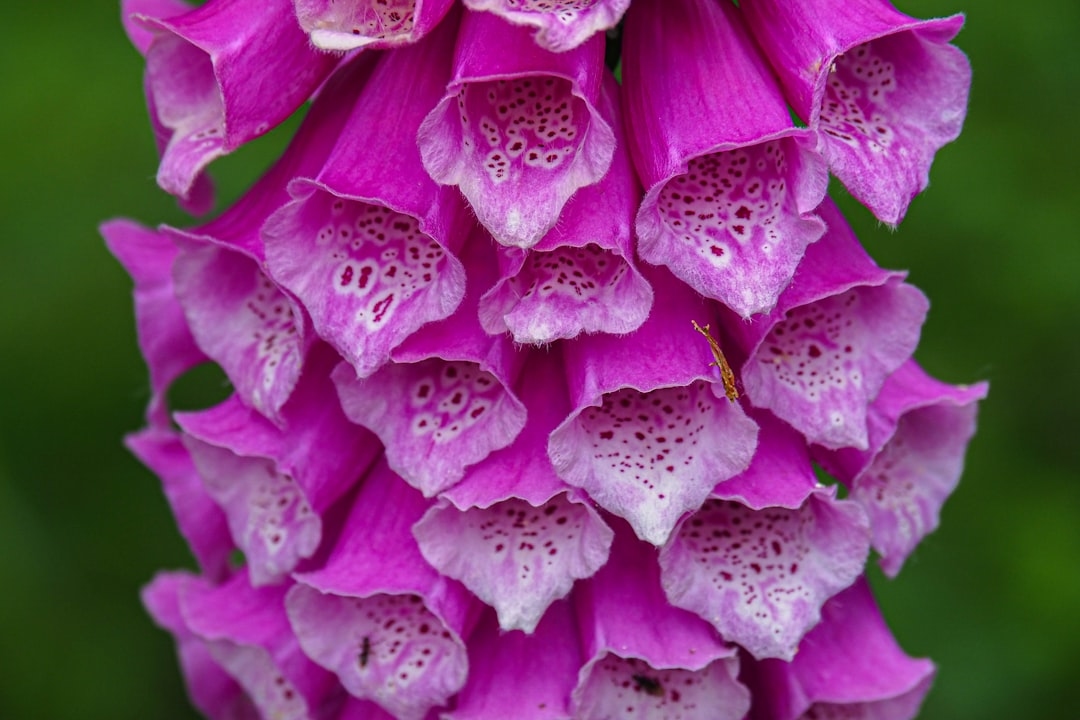
Visually, the difference is clear once you know what to look for: foxglove flowers are tubular and hang downward like bells or thimbles, often spotted on the interior. Hollyhock flowers are flat and open, resembling small hibiscus blooms. If you’re choosing between them for a symbolic gift or garden design with intent, they send very different messages.
Foxglove in the Garden: A Seasonal Timeline
Foxgloves are biennials in most of the US, meaning they complete their life cycle over two years. In Year 1, they produce a low rosette of leaves. In Year 2, they send up flower spikes that bloom from late spring through early summer — typically May through July in USDA hardiness zones 4–9.
Here’s a simple seasonal calendar for working with foxgloves:
- Fall (September–October): Sow seeds directly in the ground or start in trays. Seeds need light to germinate — press them onto the soil surface, don’t bury them.
- Winter–Early Spring: Rosettes establish roots. No action needed in most zones.
- Late Spring (May–June): Flower spikes emerge. Peak bloom and peak symbolic impact.
- Summer (July): Deadhead spent spikes to encourage a second flush of smaller blooms.
- After bloom: Allow a few plants to go to seed. Each foxglove produces up to 2 million seeds — a single plant can naturalize an entire garden bed over several seasons.
An Eco-Friendly Note on Foxglove
Foxgloves are a powerhouse for pollinators, particularly bumblebees. The tubular flowers are sized almost perfectly for bumblebees to enter fully, and the spotted interior markings act as nectar guides. Planting foxgloves in a US cottage or wildlife garden supports native and managed bee populations during their critical late-spring foraging period.
Because foxgloves self-seed freely, they require minimal replanting and no fertilizers once established in well-drained, humus-rich soil. That’s a genuinely sustainable ornamental — low input, high ecological output. If you’re building a low-maintenance pollinator garden, a packet of foxglove seeds costs $3–6 and can populate a 10-square-foot bed for years.
How to Use Foxglove Symbolism Intentionally
Understanding the meaning is one thing. Using it is another. Here are practical ways to work foxglove symbolism into real situations:
- For a healthcare worker or doctor: A bouquet with foxgloves acknowledges their power and skill — the “healing with precision” meaning lands well.
- In memorial gardens: Foxgloves’ association with thresholds and the supernatural makes them a thoughtful choice for spaces honoring someone who has passed.
- In creative studio spaces: As a desk plant or cut flower, foxglove can serve as a visual reminder of the link between creative risk and reward.
- Caution for gifts: Given their Victorian association with insincerity, foxgloves aren’t the right choice for a romantic gesture unless you’re specifically going for that layered, literary meaning.
FAQ: Foxglove Symbolism
What does a foxglove flower symbolize?
Foxglove symbolizes healing, insincerity, magic, and duality. Its meaning varies by cultural context — in Victorian flower language it meant deception, while in medical history it represents powerful healing. The plant’s toxic beauty gives it an enduring association with things that are both dangerous and transformative.
Is foxglove good or bad luck?
In Celtic folklore, foxgloves near the home were considered a double-edged sign — potentially attracting fairy protection but also fairy mischief. There’s no single “good luck” or “bad luck” verdict; the plant symbolizes unpredictability rather than clear fortune.
What does the color of a foxglove mean?
Purple foxgloves (the most common) carry the fullest range of traditional symbolism including mystery and magic. White foxgloves are sometimes associated with purity and are used in wedding gardens. Pink varieties are generally read as softer, more decorative, and carry less of the dark folkloric weight.
Can I give foxgloves as a gift?
Yes, but context matters. They work well for healthcare professionals, gardeners, nature lovers, and anyone who appreciates complexity in symbolism. Avoid them as a straightforward romantic gift — their Victorian meaning of insincerity can send the wrong signal unless both parties understand the reference.
Are foxgloves associated with any specific occasions?
Foxgloves aren’t tied to major commercial flower holidays like roses on Valentine’s Day. They appear most naturally in sympathy arrangements, cottage garden celebrations, midsummer events, and spaces honoring healing or memory. In the US, you’ll find them most commonly at garden centers from March through May, priced at $4–10 per plant.
The next time you see foxgloves in bloom — those tall, proud spikes of hanging bells in May or June — you’ll know you’re looking at a plant with genuine weight behind it. Consider adding one to your garden this fall. By next summer, you’ll have a living piece of botanical history growing in your own backyard, feeding bees and carrying centuries of meaning in every bell-shaped bloom.