Contents:
- A Brief History of Leaving Flowers at Graves
- Flowers at Grave Meaning: A Flower-by-Flower Breakdown
- Roses
- Lilies
- Chrysanthemums
- Carnations
- Forget-Me-Nots
- Sunflowers
- Cultural and Religious Traditions That Shape Flower Choices
- Practical Tips for Choosing and Placing Grave Flowers
- Fresh vs. Artificial Flowers
- Quick Cost Breakdown
- Using a Cemetery Vase
- Seasonal Flowers That Work Well at Graves
- FAQ: Flowers at Grave Meaning
- What do white flowers at a grave mean?
- Is it appropriate to leave flowers at a stranger’s grave?
- How long do flowers last at a grave?
- What flowers should you NOT leave at a grave?
- What does a single red rose on a grave mean?
- Making Your Next Visit More Intentional
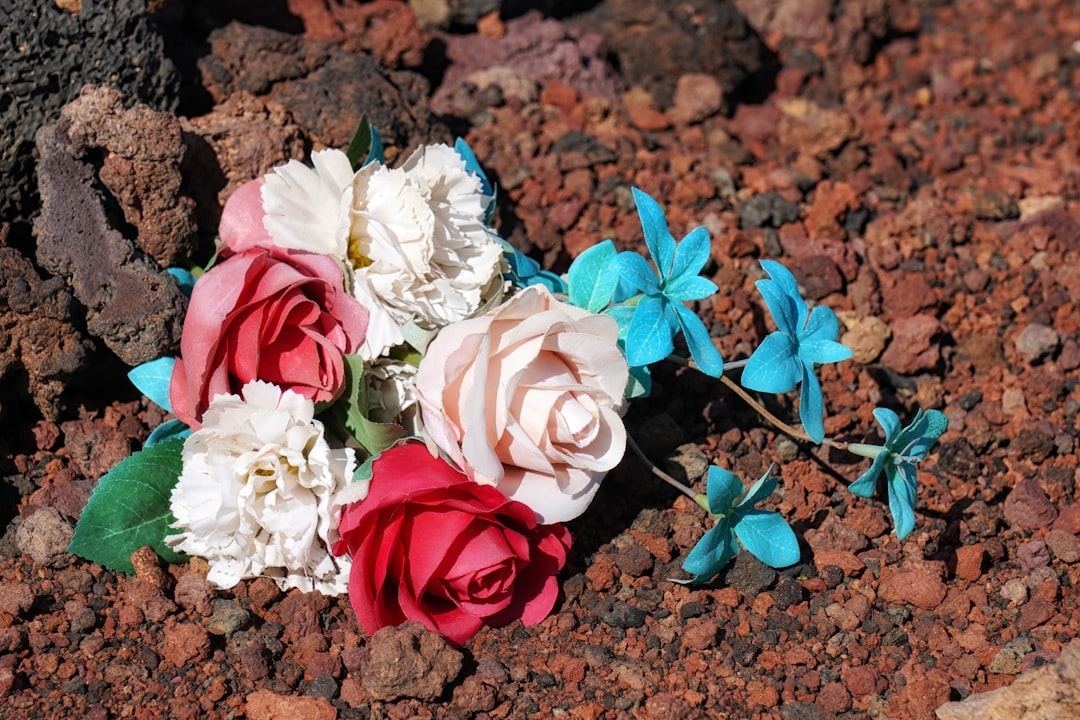
Have you ever stood at a graveside holding a bouquet, wondering whether the flowers in your hands actually carry a message? The flowers at grave meaning tradition stretches back thousands of years — and every bloom you choose says something specific about the person you’re honoring and the grief you’re carrying.
This isn’t a decorative afterthought. Flowers placed at graves are a living language. Learning even the basics of that language can transform a simple visit into something deeply personal and intentional.
A Brief History of Leaving Flowers at Graves
The practice is ancient. Archaeological evidence from the Shanidar Cave in Iraq suggests that Neanderthals buried their dead with flowers as far back as 60,000 years ago — pollen from yarrow, groundsel, and grape hyacinth was found alongside skeletal remains. The tradition carried forward into ancient Egypt, Greece, and Rome, where specific blooms were associated with gods of the underworld and the journey after death.
By the Victorian era in the United States, floriography — the language of flowers — reached its peak popularity. Mourners chose each stem deliberately, sending coded messages of love, loyalty, and remembrance. That cultural DNA is still embedded in how Americans choose cemetery flowers today, even if most people can’t name the code they’re using.
Flowers at Grave Meaning: A Flower-by-Flower Breakdown
Different flowers carry genuinely different symbolic weight. Here are the most commonly placed blooms and what they traditionally communicate.
Roses
Red roses at a grave signal deep love — romantic or otherwise. White roses express purity and reverence, making them a frequent choice for children’s graves or for someone whose life was defined by quiet dignity. Yellow roses communicate friendship and remembrance without romantic connotation. A single red rose placed alone is one of the most powerful gestures in cemetery floral tradition: it says you were my person.
Lilies
White lilies — particularly Easter lilies (Lilium longiflorum) — are the most universally recognized symbol of restored innocence after death. They appear at roughly 60% of American Christian funerals, according to floral industry surveys. Stargazer lilies, with their dramatic pink-and-white blooms, represent sympathy and the hope of reunion.
Chrysanthemums
In the US, chrysanthemums at a grave carry a message of grief and respect. They’re practical too: mums are extraordinarily long-lasting, sometimes staying fresh for two weeks in cooler weather. In much of Europe and Asia, chrysanthemums are exclusively a mourning flower — placing them on a grave feels natural and correct across many cultural backgrounds.
Carnations
Pink carnations mean remembrance. White carnations represent pure love and innocence. Red carnations — less common at graves — signal admiration. Carnations are the budget-friendly choice that carries no less meaning: a $12 bunch of white carnations is just as symbolically rich as a more expensive arrangement.
Forget-Me-Nots
The name says everything. These tiny blue flowers (Myosotis sylvatica) are perhaps the most literal floral message you can leave — I have not forgotten you. They’re especially meaningful at the graves of people who feared being forgotten or who died young.
Sunflowers
Sunflowers at a grave signal that the deceased brought light into the world. They’re a newer addition to cemetery tradition, but their meaning is unmistakable: warmth, positivity, and a life that turned toward joy.
Cultural and Religious Traditions That Shape Flower Choices
Cultural background matters enormously here. Catholic families in the US commonly leave white lilies and roses, tied to Marian symbolism. Jewish tradition generally discourages cut flowers at graves, favoring stones — but this varies by family. Mexican-American families observing Día de los Muertos use marigolds (Tagetes erecta) almost exclusively: their strong scent is believed to guide spirits home. Many Asian-American families leave white or yellow chrysanthemums as a sign of respect.
If you’re leaving flowers at the grave of someone from a cultural background different from your own, a quick call to a florist familiar with that community — or a family member — goes a long way.
Practical Tips for Choosing and Placing Grave Flowers
Fresh vs. Artificial Flowers
Fresh flowers are the traditional choice, but they last only 3–7 days outdoors depending on weather. Many cemeteries in northern US states (USDA Zones 3–5) restrict artificial flowers seasonally — check the cemetery’s rules before you visit. In warm, humid climates like the Southeast, fresh flowers may wilt within 48 hours in summer.
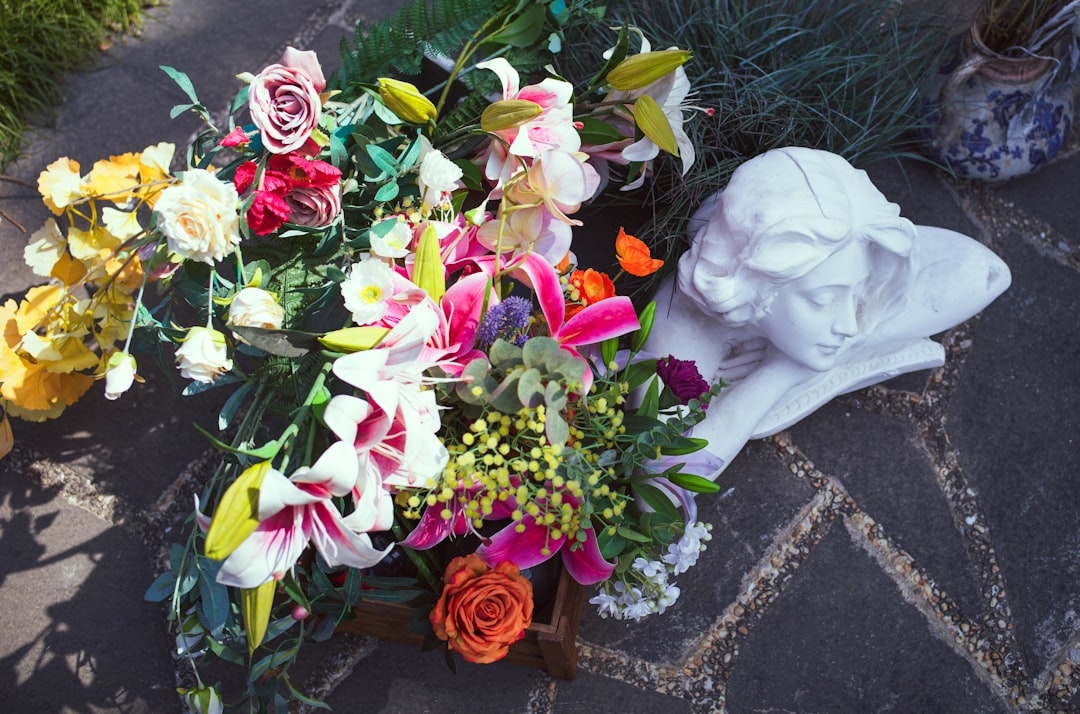
High-quality silk flowers, priced between $15–$40 for a cemetery arrangement, can last 6–12 months if UV-treated. Avoid cheap plastic options that fade and crack within weeks — they look neglectful rather than loving.
Quick Cost Breakdown
- Single stem rose or lily: $3–$7 at a grocery store or florist
- Small mixed bouquet: $12–$25
- Florist-designed cemetery arrangement with vase: $35–$85
- Seasonal potted plant (mums, marigolds): $8–$20
- Premium silk cemetery arrangement: $25–$60
Using a Cemetery Vase
Most grave markers include a built-in bronze or granite vase. These typically hold stems up to 12 inches long. Cut your stems at a 45-degree angle before placing them — this small step can add 2–3 extra days of freshness to cut flowers outdoors.
“Most people buy flowers the day of a cemetery visit, but the blooms that hold up best outdoors are ones that opened 1–2 days ago — not tight buds, not fully open. Ask your florist for stems that are ‘just cracking open.’ They’ll last twice as long in a grave vase as a fully bloomed arrangement.”
— Margaret Holloway, Certified Floral Designer (CFD), 22 years in memorial floristry, Chicago, IL
Seasonal Flowers That Work Well at Graves
Choosing flowers that are in season locally isn’t just cost-effective — it feels more connected. In spring, tulips and daffodils are widely available and carry meanings of renewal and new beginnings. Summer is ideal for sunflowers, zinnias, and lavender. Fall is chrysanthemum season. In winter, evergreen branches paired with a single white rose are a striking and meaningful combination.
Buying in-season also cuts costs by 20–40% compared to out-of-season blooms that need to be shipped from South America or greenhouse-grown.
FAQ: Flowers at Grave Meaning
What do white flowers at a grave mean?
White flowers at a grave generally symbolize purity, peace, and reverence. White lilies and white roses are the most common choices, representing innocence and deep respect for the deceased.
Is it appropriate to leave flowers at a stranger’s grave?
Yes. Leaving flowers at an unmarked, neglected, or unknown grave is widely considered a compassionate gesture of shared humanity. A single white flower is the most neutral and respectful choice in this situation.
How long do flowers last at a grave?
Fresh cut flowers typically last 3–7 days outdoors. Potted plants may survive 1–3 weeks depending on watering and weather. UV-resistant silk arrangements can last 6–12 months before fading noticeably.
What flowers should you NOT leave at a grave?
There are no universally forbidden flowers, but context matters. Bright tropical flowers like birds of paradise can feel tonally mismatched at a somber grave. Some cemeteries ban loose petals that create maintenance issues. Always check cemetery rules before leaving plants with soil.
What does a single red rose on a grave mean?
A single red rose is one of the most intimate grave offerings — it traditionally signals that the deceased was deeply loved, often romantically. It’s a quiet but powerful message: you were irreplaceable.
Making Your Next Visit More Intentional
The next time you visit a grave, consider arriving with a specific flower chosen for a specific reason — not just whatever was at the gas station. Spend two minutes before you go looking up what the deceased loved in life. Did they grow roses? Leave a rose. Did they love the outdoors? A bundle of wildflowers or lavender connects your tribute to who they actually were.
A thoughtfully chosen $5 stem can carry more meaning than a $60 arrangement picked without thought. That’s the real language of grave flowers: specificity, memory, and the small act of saying — out loud, in petals — that someone’s life mattered.